
Introduction
In today’s digital era, IT governance is more critical than ever. Organisations are under increasing pressure to comply with a myriad of regulatory requirements while maintaining robust security and operational efficiency. Traditional manual methods of managing compliance are becoming obsolete, paving the way for compliance automation. These transformative approaches are not only streamlining processes but also reshaping the landscape of IT governance.
Understanding Compliance Automation
Compliance automation involves the use of advanced technologies to automate the processes of monitoring, managing, and ensuring compliance with regulatory standards. Key components of compliance automation include:
- Artificial Intelligence (AI): AI algorithms can analyse vast amounts of data to identify compliance issues and predict potential risks.
- Machine Learning (ML): ML models learn from historical data to improve the accuracy and efficiency of compliance checks.
- Robotic Process Automation (RPA): RPA tools automate repetitive tasks such as data entry and reporting, reducing human error and freeing up valuable time for IT teams.
The benefits of compliance automation are manifold. It increases efficiency by automating routine tasks, enhances accuracy by minimising human error, and offers scalability to meet growing compliance demands.
The Emergence of RegTech Solutions
Regulatory Technology, or RegTech, has rapidly emerged as a vital component in the compliance landscape, driven by the increasing complexity of regulatory requirements across various industries. Initially gaining traction in the financial sector following the 2008 global financial crisis, RegTech solutions have expanded to address compliance needs in healthcare, insurance, telecommunications, and more.
RegTech leverages advanced technologies such as AI, machine learning, blockchain, and robotic process automation (RPA) to streamline regulatory processes, enhance transparency, and reduce risk
These tools automate routine compliance tasks, provide real-time insights, and adapt to regulatory changes, making it easier for organisations to maintain compliance without compromising productivity
The benefits of RegTech are manifold, including improved data management, reduced compliance costs, and enhanced decision-making capabilities. By enabling organisations to navigate complex regulatory environments efficiently, RegTech solutions are becoming indispensable in ensuring robust IT governance and operational excellence.
The Impact of Compliance Automation and RegTech on IT Governance
Compliance automation and RegTech significantly enhance IT governance by:
- Streamlining Processes: Automated systems handle repetitive compliance tasks, allowing IT teams to focus on strategic initiatives.
- Real-Time Monitoring and Alerts: Continuous monitoring ensures that any deviations from compliance standards are detected and addressed promptly.
- Improved Risk Management: Predictive analytics enable organizations to identify and mitigate potential risks before they escalate.
By integrating compliance automation and RegTech, organisations can maintain continuous compliance, reduce the risk of non-compliance, and ensure that their IT governance frameworks are robust and effective.
Emerging Trends in Compliance Automation and RegTech
Several emerging trends are shaping the future of compliance automation and RegTech:
- Blockchain Technology: Blockchain offers secure and transparent compliance records, enhancing trust and accountability.
- AI and ML Integration: The use of AI and ML is growing, making compliance systems more intelligent and adaptable.
- Cloud-Based Solutions: Cloud-based compliance tools provide flexibility and scalability, making them ideal for remote and distributed teams.
These trends are driving the evolution of compliance automation and RegTech, making them more efficient and effective in addressing the complexities of regulatory requirements.
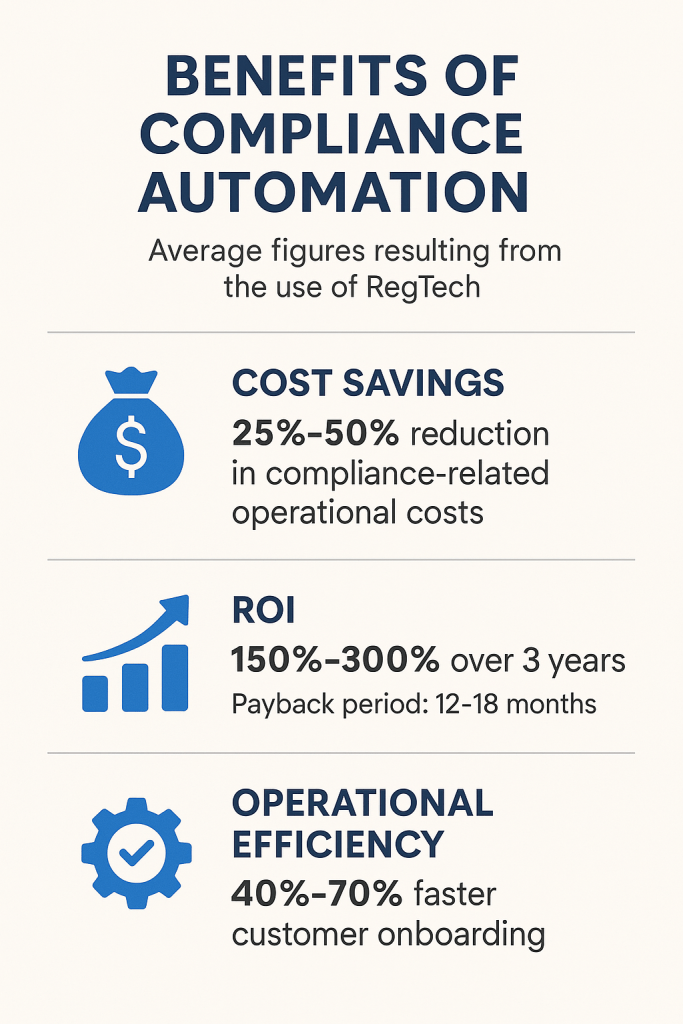
The picture highlights three key advantages of using RegTech:
- Cost Savings – Organisations can achieve a huge in compliance-related operational costs.
- Return on Investment (ROI) – RegTech adoption can deliver a whooping 300% ROI over three years, with a short payback period.
- Operational Efficiency – Automation enables faster customer onboarding processes.
Case Studies and Real-World Examples
Several organizations have successfully implemented compliance automation and RegTech in their IT governance frameworks. For instance:
- 4CRisk.ai for Compliance Management: 4CRisk.ai leverages advanced AI to revolutionise compliance and risk management, significantly enhancing efficiency and accuracy. Their tools, such as ARIA Co-Pilot and Compliance Map, streamline compliance processes by reducing the time required for compliance mapping from months to days and ensuring comprehensive regulatory coverage. : Info-Tech Research Group
- Push’s Compliance Automation Journey: Faced with a growing demands for transparency and adherence to these security standards, Push partnered with Vanta and VioletX to integrate a solid security and compliance framework. VioletX helped develop a comprehensive SOC 2 framework, leading to a successful audit. This strategic approach enabled Push to establish trust in the digital payment industry, positioning the company as a secure and reliable platform for its users and setting a solid foundation for sustainable growth.
Best Practices for Implementing Compliance Automation
To successfully integrate compliance automation into IT governance, organisations should:
- Select the Right Tools: Choose automation tools that align with organisational goals, priorities and regulatory requirements.
- Continuous Monitoring: Implement systems for continuous monitoring and regular updates to stay ahead of regulatory changes.
- Employee Training: Ensure that employees are trained to use compliance automation tools effectively.
By following these best practices, organisations can maximise the benefits of compliance automation and ensure that their IT governance frameworks are robust and effective.
Quick Poll:
Conclusion
Compliance automation is not just technological upgrade, but it’s a strategic investment in the future of IT governance. By enhancing efficiency, providing real-time insights, reducing costs, improving risk management, and offering scalability, these solutions empower organisations to navigate the complexities of regulatory compliance with confidence. As the digital landscape continues to evolve, embracing compliance automation and RegTech will be key to maintaining robust IT governance and achieving long-term success.
Subscribe to our newsletter for monthly insights on compliance tech.

 Bafana Nkosi - Leadership Coach
Leave a comment